
The Core Challenge: Inside the Real-Time Engine (Technical Deep Dive)
OLMS is built on a custom Linux distribution utilizing a Real-Time (RT) kernel and the Ardour Headless audio engine. This stack is engineered for extreme stability and ultra-low latency, crucial for professional live sound.
| Component | Functional Detail | Core Objective | Key Performance Indicators |
|---|---|---|---|
| Base Platform | Custom Linux Distribution with Real-Time (RT) kernel. | Ensure minimum possible latency (goal: < 5 ms round-trip). | Round-Trip Latency (RTL) objective: < 5 ms. |
| Mixer Core | Ardour Headless (GPL) with OSC control, managed by the OLMS Orchestrator Daemon (Level 3 Logic). | Provide a professional, stable mixing engine fully controllable remotely. | Control via Web Browser (HTML5/JS) using OSC. |
| Audio Server | JACK Audio Connection Kit configured to operate with maximum Real-Time (RT) priorities to minimize latency. | Manage audio I/O and routing with maximum efficiency and redundancy. | ZERO (0) X-runs in one hour of stress testing under load. |
| Scalability & Redundancy | Core-Level Failover (Software Redundancy): Engine A / Engine B running in parallel on a single Mini-PC for immediate, glitch-free switching. | Ensure ZERO X-runs in 1 hour and maintain RTL < 5 ms regardless of DSP loads, with automatic failover. | Switching Time (Failover): < 1 ms (imperceptible). |
Distributed Signal Processing (DSP Farm)
To ensure unlimited scalability of processing power beyond the limits of a single Master PC, OLMS adopts a Distributed Processing (DSP Farm) model based on a Master/Slave architecture over Ethernet, complementary to the internal core-level failover.
| Role | Primary Function | Workload |
|---|---|---|
| Master PC (Core RT) | Management of physical audio I/O, Redundancy (Core-Level Failover), system clock, and control interface (OSC Bridge). | Light loads (Mix Bus, critical I/O, Failover Logic). Must maintain latency < 5 ms. |
| Slave PC(s) (N-Units) | Execution of high-intensity DSP plugin loads (e.g., Anti-Feedback System, complex Reverbs, Amp Simulator), delegated by the Master. | Heavy loads, managed by the Master. |
🚀 OLMS Startup Process Overview
The OLMS system implements a comprehensive multi-phase startup process designed for professional real-time audio processing. The startup sequence ensures optimal system configuration, hardware detection, and audio engine initialization.
Startup Architecture
The startup process follows a 6-phase approach with intelligent bypass capabilities:
- Phase 0: Pre-Startup and Process Management - Audio environment cleanup and process termination, lock file management and Ardour session handling, USB audio device detection and hardware reset
- Phase 1: Real-Time System Optimization - Kernel parameter configuration (RT runtime allocation), CPU governor enforcement and power management, realtime privilege configuration and user group verification
- Phase 2: Hardware Configuration - CPU affinity management and core isolation, hardware detection and IRQ pinning, system topology optimization
- Phase 3: JACK Server Initialization (Smart Detection) - Fast Mode: Bypass detection when optimal settings are known (via launcher variables), Standard Mode: Two-phase hardware detection (bit-depth and buffer optimization), Anti-zombie mode with extended stability monitoring, Socket permission management and connection validation
- Phase 4: X11 Environment & Display Management - Multi-method display detection and XAUTHORITY configuration, runtime directory management and D-Bus session setup, graphics environment isolation and headless mode support
- Phase 5: Ardour DAW Startup - Session adaptation and JACK port mapping, user environment transition and process management, headless operation support with Xvfb
- Phase 6: Final System Report - Comprehensive system verification and technical data extraction, process status monitoring and performance metrics, operational readiness assessment
Key Startup Features
- Modular Design: Each phase can be tested and debugged independently
- Smart Bypass Capabilities: Phase 3 includes intelligent bypass when optimal audio settings are known
- Hardware Agnostic: Universal compatibility across Linux distributions
- Robust Error Handling: Graceful degradation with fallback mechanisms
- Real-Time Optimization: Comprehensive system tuning for low-latency audio
- User-Centric: Smart user detection for both direct execution and sudo scenarios
Technical Specifics: Stability, Latency, and Architecture
The OLMS vision is predicated on creating a system with Plug-and-Play reliability. This demands strict control over every layer of the stack, exceeding the capabilities of standard consumer operating systems.
Core Objectives
- Round-Trip Latency (RTL): The absolute engineering objective for the production system is consistently < 5 ms. The tolerance for the initial PoC (Proof-of-Concept) is < 10 ms. This latency must be achieved reliably from physical input through LV2 Host processing to physical output.
- Stability (X-runs): The system must guarantee ZERO (0) X-runs during an extended, one-hour stress test under typical live load conditions. X-runs are catastrophic failures in live sound.
Base Platform & Kernel Configuration
We require a custom, minimal Linux distribution. The key to our performance lies in kernel optimization:
- RT Kernel: Using the Real-Time kernel ensures audio threads receive maximum CPU priority, preventing critical audio processing from being preempted by system background tasks (e.g., networking, file I/O).
- Kernel Configuration: Meticulous tuning is required to minimize system jitter and maximize audio thread responsiveness.
Audio Server & Multi-Card Certification
JACK Audio Connection Kit is chosen for its proven reliability in professional audio environments and real-time performance:
- JACK Focus: The goal is validated multi-card reliability. We must ensure multiple USB audio interfaces can operate simultaneously without clock drift or X-runs, a common point of failure for legacy systems.
- Legacy Bypass: We are configuring JACK to operate with the lowest possible buffer sizes and maximum thread priority, bypassing the limitations of older audio servers like PulseAudio which often fail under heavy DSP load.
Headless Mixer Core (Ardour Headless)
We use Ardour Headless strictly as a processing engine, not a graphical application:
- Control via OSC: All control signals (faders, sends, mutes) are exclusively handled via Open Sound Control (OSC) commands sent over the network. This eliminates the CPU load associated with rendering a complex GUI.
- Resource Dedication: By running Ardour in headless mode, the CPU dedicates maximum resources to DSP (plugin processing and mixing stability), which is critical for maintaining the sub-5 ms RTL target.
Product Benefits for the Professional Audio Niche
OLMS is designed to empower every player in the live sound ecosystem.
Benefits for Service Providers & Sound Engineers
- Guaranteed Stability: The Core-Level Failover system ensures ZERO audible glitches and guaranteed uptime under load, addressing the critical vulnerability of PC-based systems.
- Unlimited Headroom: The DSP Farm architecture enables virtually unlimited processing power for complex productions (heavy reverb, advanced processing) without sacrificing the Master's critical sub-5 ms latency guarantee.
- Cost & Logistics Efficiency: Allows transformation of common, affordable PC hardware into dedicated, certified rack mixers, reducing dependency on expensive proprietary hardware.
Benefits for Musicians & End Users
- Professional Accessibility: Provides access to a professional-grade mixing core (Ardour Headless orchestrated) with a lower barrier to entry.
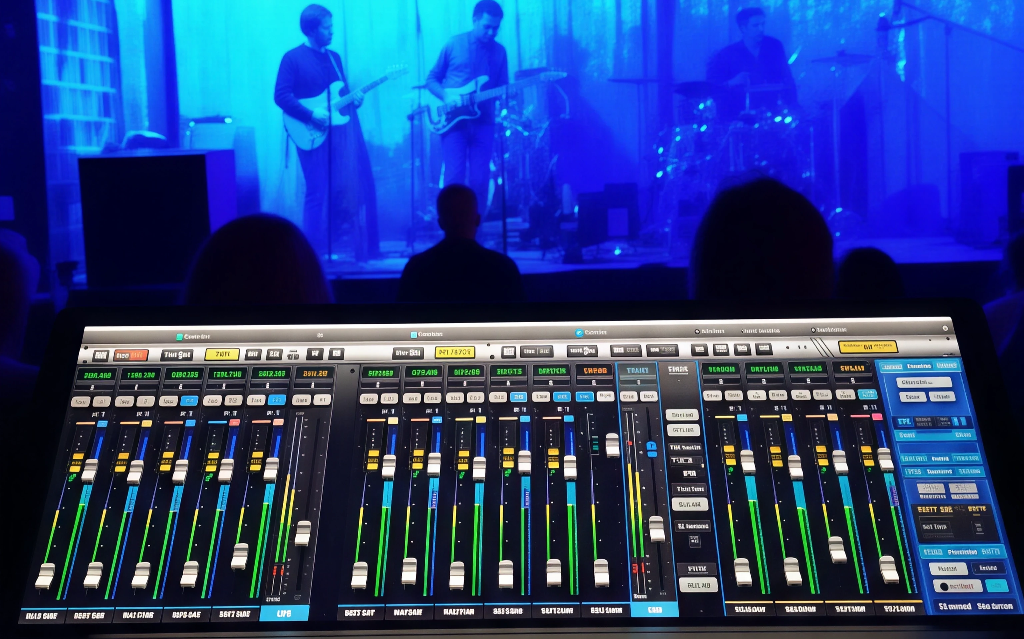
- Total Wireless Control: Full control via a Web Browser User Interface (HTML5/JS) over OSC, enabling control from any Wi-Fi connected tablet or smartphone.
- Ecosystem of Certified Features: Access to deeply integrated, proprietary, and certified premium functionalities via the Marketplace, such as the Anti-Feedback System (AFS) or Virtual Sound Check Suite.
Benefits for Plugin Developers
- Curated Marketplace Access: Opportunity to sell proprietary, high-value plugins through the "Certified and Curated" Marketplace.
- RT Stability Validation: Sales are based on guaranteed RT Stability and Latency Certification, providing a strong competitive advantage over generic software solutions.
- Code Protection: Proprietary UI/Audio modules can be dynamically injected into the GPLv3 GUI slots without modifying the core open source code.
The Leaders Team
Our core structure requires five Founders. The Project Manager is establishing the technical vision, and your mission is to help recruit the remaining three technical leaders to fulfill the Proof-of-Concept tasks.
Project Owner
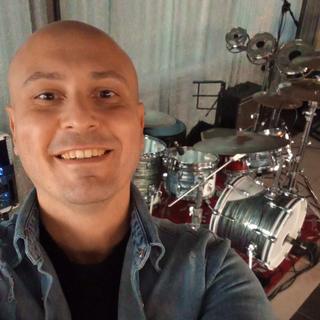
Project Manager, Technical Vision, Sound Engineer: the project's origin
Francesco Nano brings over 15 years of experience in audio engineering and education. Since 2009, he has been the owner of scuolasuono.it, an online sound engineering course. His formal training includes studies at the Accademia del Cinema di Bologna and the Scuola di Alto Perfezionamento in Saluzzo. After a 20-year pause, Francesco recently returned to live sound engineering, transitioning from analog mixers to digital solutions like the UI24R. His hands-on experience with DAWs revealed critical limitations in current live mixing technology, inspiring the creation of OLMS. As an active live sound engineer for a band, Francesco serves as the project's primary user and field tester.
Filled
The MVP Task: "The Core Fader"
The objective is to redefine the initial Proof of Concept (PoC) of the OLMS project into a Minimum Value Product (MVP) called "The Core Fader". This is a strategic step aimed at validating the system’s core value before proceeding with the development of more complex features.
The MVP focuses on proving Real-Time stability combined with the fundamental user experience.
Primary Objectives
"The Core Fader" must demonstrate the system's feasibility through three key and interconnected outcomes:
- Real-Time Stability Validation: We must achieve the critical goal of ZERO (0) X-runs in one hour of stress testing, confirming that the system is capable of sustaining reliable live audio load.
- Ultra-Low Latency Target (RTL): The audio Round-Trip Latency (RTL) must be less than 5 ms, ensuring an immediate and professional response.
- Functional Remote Control: The entire system, consisting of the Real-Time Kernel, JACK, and Ardour Headless, must route 1 Input→1 Output and its level must be remotely controllable via the OSC protocol.
Essential Components of the Task
To achieve these objectives, the team must focus on the minimum integration of four essential components, all strictly Open Source (GPLv3):
- Audio Core (Architecture): Installation and configuration of a Linux system with a Real-Time Kernel and JACK, optimized for 1×1 audio routing through the Ardour Headless instance.
- Control Logic: Development of the base logic for the Orchestrator and the OSC Bridge Server, sufficient to translate a fader movement command into an action on the audio channel within the Mixer Core.
- User Interface (UX/UI): Creation of the static HTML/CSS mockup for the Master Fader, ensuring it is responsive and perfectly usable on touch devices like tablets and smartphones.
- Technical Certification: Execution of stress tests to document and certify that the remotely controlled audio maintains the required latency and stability (ZERO X-runs).
The success of this MVP will validate the fundamental model of the digital rack mixer, unlocking the next phase of development and the commercial ambitions of the OLMS project.